Best Shopify AI Chatbots in 2026: 5 Tools Compared
An unanswered question at 2am is a cart you already lost. We compare the five Shopify AI chatbots worth shortlisting in 2026 — Zipchat AI, YourGPT, Gorgias, Tidio and Rep AI — by what each one is actually best at, and how each one really bills.
Open the support inbox of any Shopify store doing real volume and you will find the same five questions, over and over, in slightly different words. Where is my order. Does this fit. Can I return it. Where's my refund. Does this code still work.
None of them are hard. Every one of them has an answer sitting in Shopify already — in the order record, the product data, the shipping status, the returns policy. The problem was never that the answers are difficult. The problem is that a human has to go and fetch them, one conversation at a time, and a human is asleep at 2am when a shopper in another timezone is deciding whether to buy.
That gap is the whole business case for an AI chatbot on a Shopify store, and in 2026 it has stopped being a nice-to-have.
Why a Shopify store ends up needing one#
There are two separate leaks, and they look like different problems until you notice they're the same one.
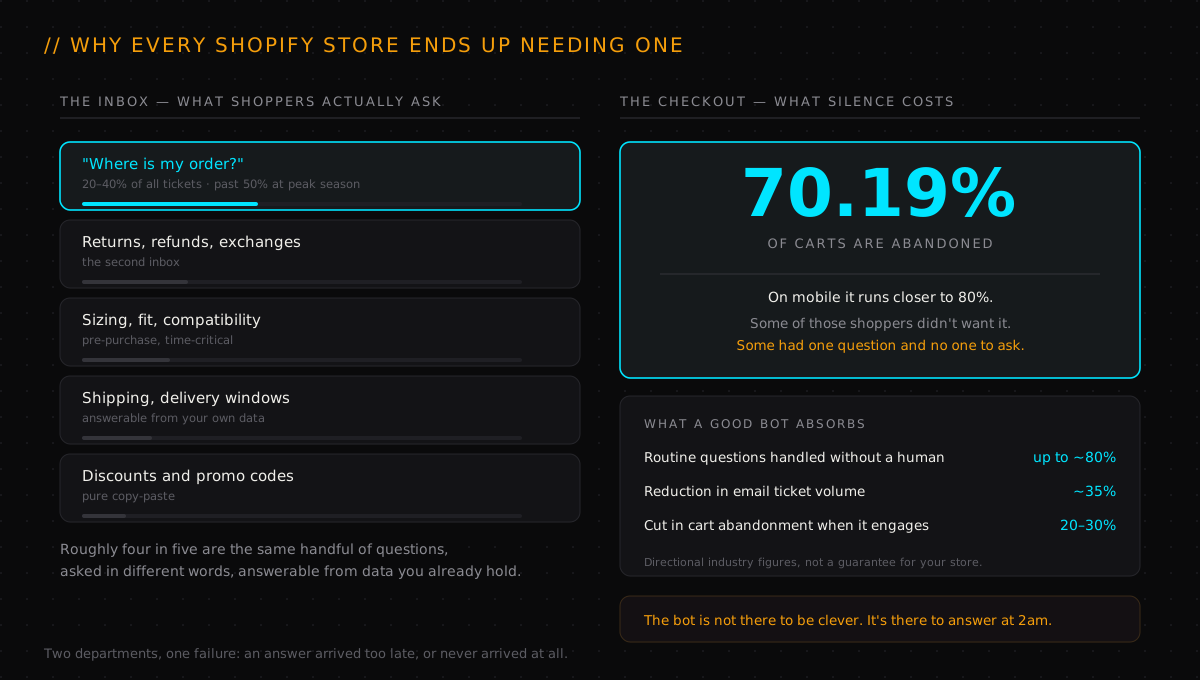
Leak one is the inbox. Where is my order — WISMO, in the trade — runs at roughly 20–40% of all support tickets on a typical store, and pushes past half during peak season. Add returns, refunds, sizing questions and promo-code queries and you're looking at a support queue where the overwhelming majority of tickets are variations on a handful of questions with answers your own systems already know.
Leak two is the checkout. Around 70% of carts are abandoned — Baymard's meta-analysis across fifty studies puts it at 70.19%, and on mobile it's closer to 80%. Plenty of those shoppers were never going to buy. But a meaningful slice of them had exactly one blocking question — will this arrive before Friday, is this the right size, can I return it if it isn't — and no way to get it answered in the ten seconds before they closed the tab.
Both leaks are the same failure with two different price tags: an answer arrived too late, or it never arrived at all.
What a Shopify chatbot actually has to do in 2026#
Here's the distinction that decides whether any of this works, and it's the one the video opens with:
A basic chatbot answers questions. A real AI chatbot takes action.
A bot that has been fed your FAQ page can tell a shopper what your returns policy is. That is genuinely useful and it is also the easy half. The hard half is the bot that can look up this customer's order, tell them where it is, start the return, check whether the item they're eyeing is actually in stock in their size, and hand the conversation to a human the moment it's out of its depth.
The difference is access. One is reading a document. The other is connected to live Shopify data and permitted to do something with it. On a store, four jobs matter:
- Product discovery — understanding what someone is vaguely describing and putting the right product in front of them, which is a sales job, not a support job.
- Order status — reading the actual order and the actual tracking, which is what kills the WISMO queue.
- Returns and refunds — starting the process inside the conversation instead of pointing at a form.
- Knowing when to stop — recognising the angry, the unusual and the high-value, and passing it to a person with the context attached.
Everything below is judged on those four, plus one question most comparisons skip entirely: what does it actually cost you when it works?
The five, ranked by what they're best at#
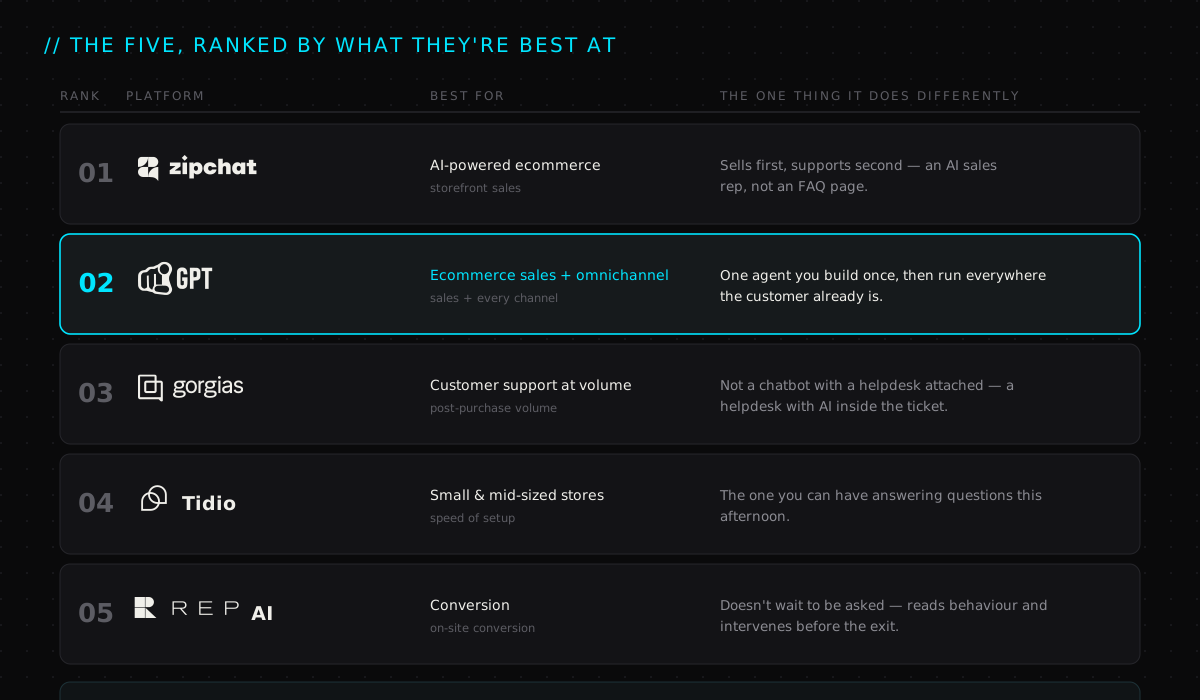
One thing to be clear about before the individual write-ups: this is a ranking by use case, not a leaderboard. Nothing on this list is the best at everything, and the two platforms at opposite ends solve problems that barely overlap. A store bleeding carts and a store drowning in tickets should not end up with the same tool.
01 · Zipchat AI — best for AI-powered ecommerce#
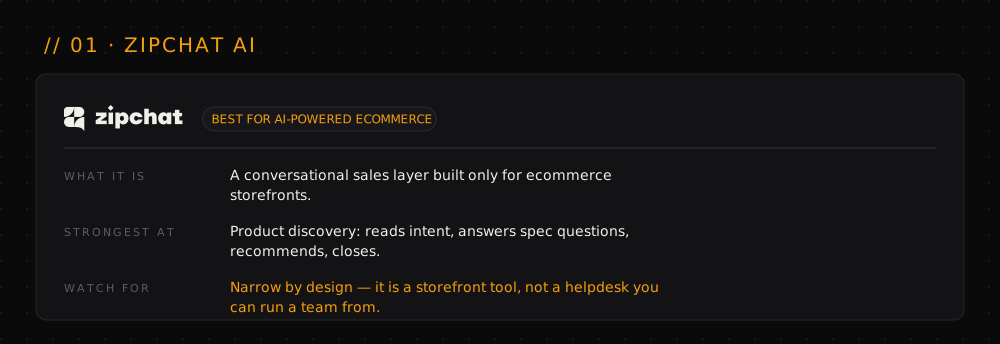
Zipchat AI is built around one conviction: the chat widget on a store is a sales surface, not a support surface. Everything follows from that.
It reads what a shopper is trying to describe — not the exact product name, the vague version of it — answers questions about specs and materials and fit, recommends what actually matches, and steers the conversation toward a purchase. It handles the post-purchase side too, order tracking included, but that isn't where the product's attention is.
Where it shines: stores where the catalogue is big enough or technical enough that shoppers genuinely need help finding the right thing. If your customers routinely buy the wrong variant, or don't buy at all because they can't tell two SKUs apart, this is aimed squarely at you.
Where it doesn't: it isn't a help desk. You cannot run a support team out of it the way you can out of Gorgias, and it doesn't try to be everywhere your customers are. It's a storefront tool that does storefront work well.
On cost: flat monthly tiers with a capped AI-reply allowance. The virtue is predictability — you know the ceiling. The risk is a launch week or a Black Friday spike that burns the allowance early.
02 · YourGPT — best for ecommerce sales plus omnichannel#
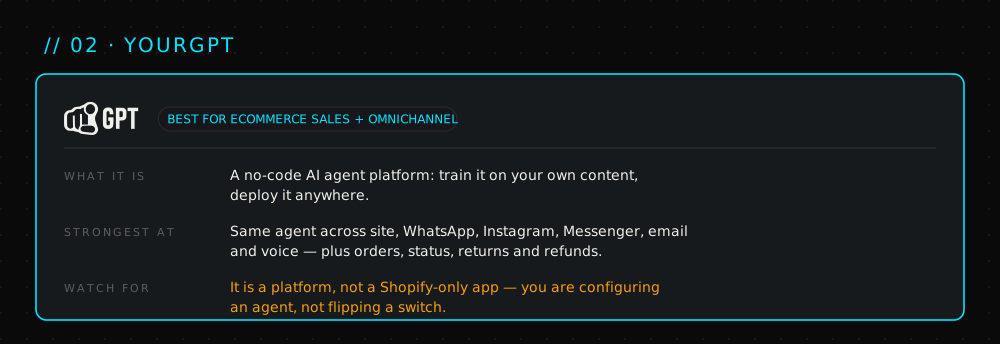
YourGPT earns its place on a different argument from everything else here. The other four are, in various ways, a better chat widget. YourGPT is a no-code AI agent platform built for ecommerce — and the practical difference is that it covers both halves of a store, then follows the customer off it.
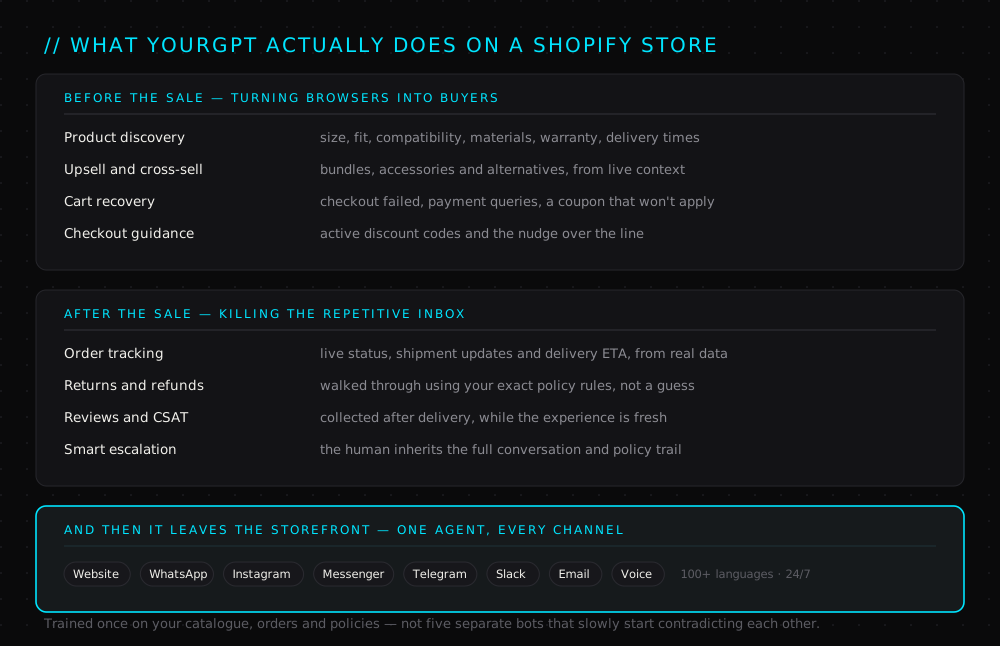
Before the sale, it sells. Product discovery on the questions that actually block a purchase — size, fit, compatibility, materials, delivery times — plus bundle and accessory recommendations from live context, and cart recovery for a failed checkout or a discount code that won't apply.
After it, it clears the inbox. Wired to live order data, it gives real status, shipment updates and delivery ETAs instead of a tracking link, and walks returns and refunds through your exact policy rules. The mechanism underneath is live actions — the agent triggering real workflows in-session, which is the line between describing your returns policy and starting the return.
Then it leaves the storefront. The same agent — same training, same tone, same knowledge — runs on website, WhatsApp, Instagram, Messenger, Telegram, Slack, email and voice, in 100+ languages. A customer finds you on Instagram, asks about sizing in a DM, buys on the site, chases delivery on WhatsApp. One agent follows them, instead of five that slowly start contradicting each other.
And you build it, not a developer. Train it on your site URLs, help docs, policy PDFs and product data; set behaviour and escalation in a visual builder. Escalation hands a human the full conversation and policy trail.
Where it shines: stores where sales and support are the same conversation, and that conversation is already spread across channels.
Where it doesn't: it's a platform, not a one-click Shopify app. Basic setup is quick, but connecting live order data and getting escalation right is an afternoon of thoughtful work, not five minutes.
On cost: a platform plan covering the agent and its channels, with a free tier to build on first. Message volume and how many channels you switch on move the number.
03 · Gorgias — best for customer support at volume#
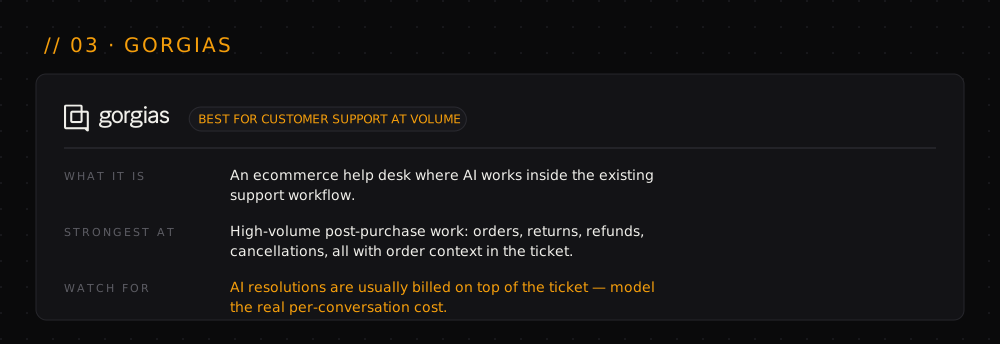
Gorgias approaches the problem from the other direction entirely. It is not a chatbot that grew a help desk. It is an ecommerce help desk — tickets, queues, macros, agents, SLAs — that has AI built into the workflow rather than bolted on beside it.
The practical consequence is that both the AI and your human agents are looking at the same thing: the ticket, with the customer's order history, cart and context already attached. The AI can resolve the routine post-purchase work — order lookups, returns, refunds, cancellations — and when it hands over, the human doesn't start from zero.
Where it shines: established stores with a real support queue and real people staffing it. If your problem is stated as "my team cannot clear the backlog," this is the category you're shopping in, and Gorgias is the incumbent for a reason — it's deeply embedded in the Shopify ecosystem and used by a large share of serious brands.
Where it doesn't: it's overkill for a small store. If you don't have a support team, you don't need a tool for running one.
On cost — read this part twice: Gorgias bills on ticket volume, and its AI resolutions are typically a separate per-conversation charge on top. So an automated conversation can be billed twice: once as a ticket, once as an AI resolution. That is not a scandal — automation that works is worth paying for — but it does mean the sticker price on the plan is not the number you should be planning against. Model your actual monthly conversation volume before you sign.
04 · Tidio — best for small and mid-sized stores#
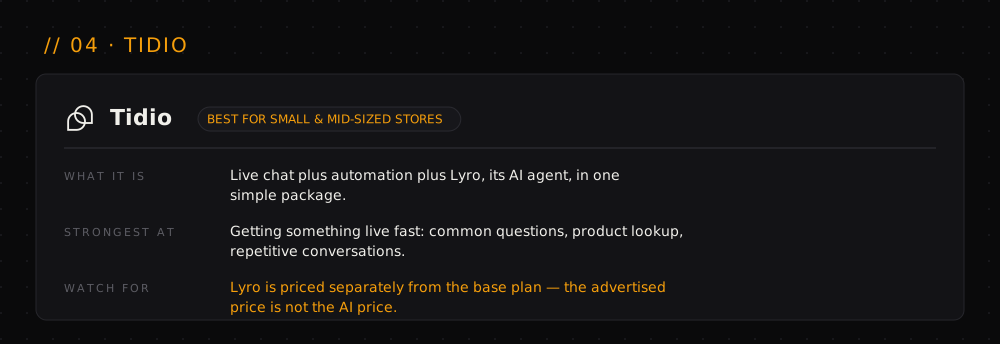
Tidio combines live chat, rule-based automation and Lyro, its AI agent, into one package whose main virtue is that you can actually finish setting it up.
Lyro answers the common questions, helps shoppers find products, and takes the repetitive conversations off your plate. It is not trying to out-sell Zipchat or out-support Gorgias. It's trying to be the thing a two-person store can have running by this afternoon — and that is a real and underrated product goal.
Where it shines: small and mid-sized Shopify stores that want AI answering customers without adopting a support platform, hiring anyone, or spending a week on configuration.
Where it doesn't: as you grow into genuinely complex workflows — deep order operations, multi-channel conversations, custom logic — you'll feel the ceiling. Simplicity is the product, and simplicity has a limit.
On cost: the trap here is that Lyro is billed separately from your base Tidio plan, priced by AI conversation. The advertised plan price is the live chat price, not the AI price. Add both together before you compare it to anything else on this list.
05 · Rep AI — best for conversion#
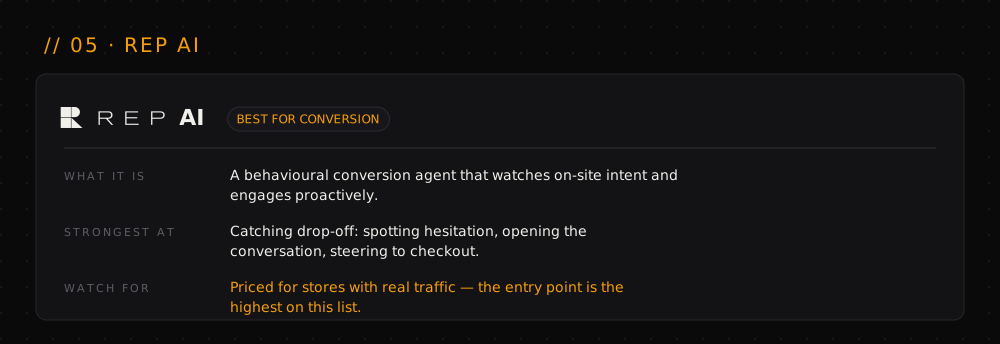
Rep AI inverts the basic assumption of a chat widget. Every other tool here waits to be asked a question. Rep AI watches how someone is behaving on the page — hesitating, bouncing between variants, drifting toward the exit — and opens the conversation itself, at the moment the shopper is about to leave.
From there it does what a good floor associate does: works out what they're actually after, puts the right product in front of them, and moves them toward checkout. The entire product is built around one number, and that number is conversion rate.
Where it shines: stores with enough traffic for behavioural signals to mean something, where the problem is unambiguously "people arrive and don't buy" rather than "people buy and then email us."
Where it doesn't: low-traffic stores get little from behavioural targeting, and this is the most expensive starting point on the list — it's priced by sessions and catalogue size, with overage when traffic spikes. That is a real budget commitment, not an experiment.
The part the feature list hides: how each one bills#
Feature grids make these five look far more similar than they are. Pricing models don't — and the pricing model is what you'll actually live with.
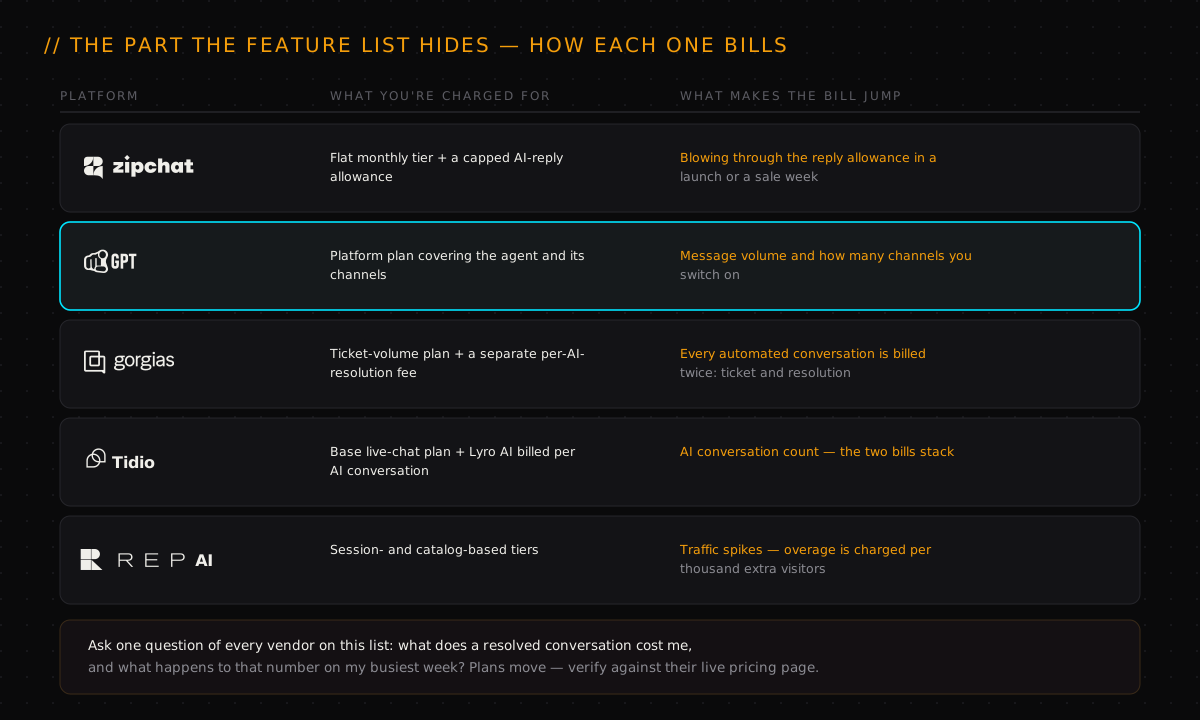
Notice that no two of them charge for the same thing. One charges per reply, one per resolution, one per session, one per AI conversation on top of a base plan. You cannot line up the monthly prices and call that a comparison.
There is exactly one question that makes them comparable, and it's worth asking every vendor directly:
What does one fully resolved customer conversation cost me — and what does that number do on my busiest week of the year?
The second half is where the unpleasant surprises live. Automation bills scale with traffic, and traffic is precisely what you're trying to increase. A tool that's cheap in February and eye-watering in November has not saved you money; it has moved the cost to the month you could least afford it.
(Plans and prices change constantly in this category. Everything above describes the shape of each pricing model, not a quote — check the vendor's live pricing page before you commit.)
So which one should you actually pick?#
Start from the thing that's costing you money right now, not from the feature list.
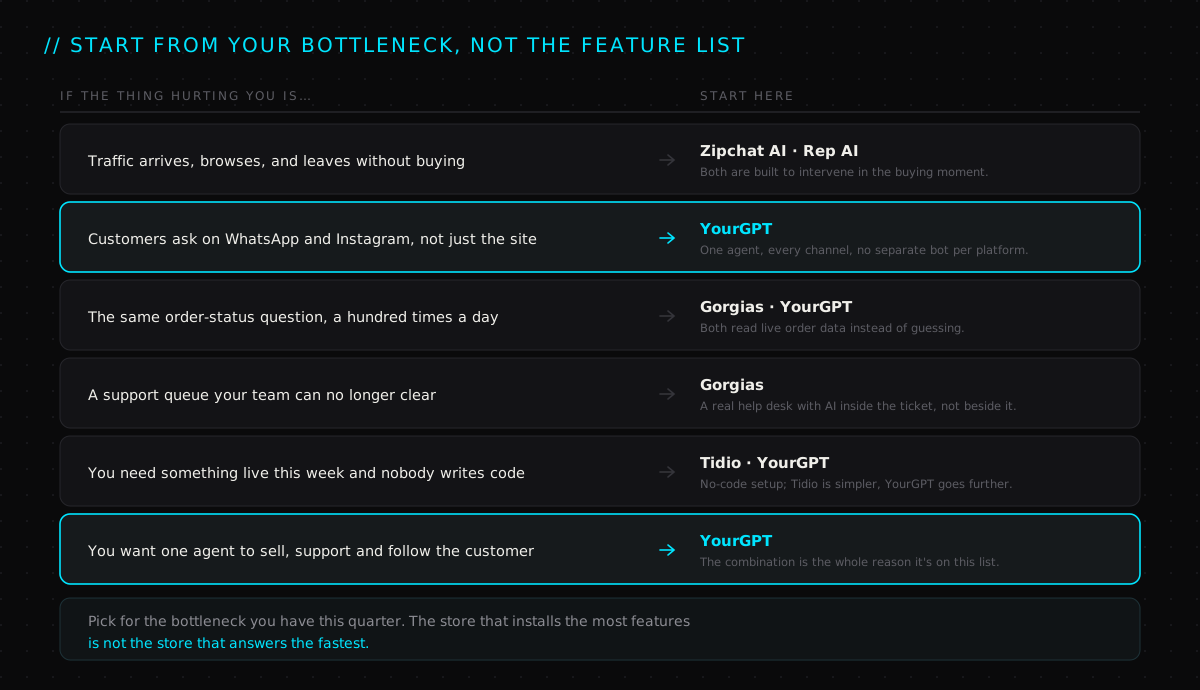
Condensed to a paragraph:
If your problem is on-site conversion, look at Zipchat AI and Rep AI — Zipchat if shoppers need help choosing, Rep AI if they need catching before they leave. If your problem is a support queue with a team behind it, Gorgias is the category incumbent and it's the incumbent for good reasons. If you need something live this week and nobody on the team writes code, Tidio is the shortest path to a working bot.
And if the honest description of your problem is "customers ask us everything, everywhere, and we answer all of it by hand" — sales questions and support questions, on the site and in DMs and over email — then YourGPT is the one built for that specific shape. One no-code agent, trained on your business, doing both halves of the job, deployed across every channel your customers already use. That combination is why it sits where it does on this list.
The mistake worth avoiding#
The most common failure here isn't picking the wrong vendor. It's picking on feature count.
Every platform on this page will show you a comparison grid where they have more ticks than everyone else. All of those grids are true, and none of them are useful, because a feature you don't use is not an advantage — it's a line on an invoice.
The store that wins is not the one that installed the most capable chatbot. It's the one whose customers get a correct answer in under ten seconds, at whatever hour they asked, on whatever channel they used. Choose the tool that does that for your customers, and ignore the rest of the grid.
Frequently asked questions#
Do I really need an AI chatbot for my Shopify store?#
If you're answering the same questions by hand, yes — that's the test. Not store size, not revenue. Where-is-my-order alone accounts for roughly 20–40% of support tickets on a typical store, and it's a question your own order data already answers. Add returns, sizing and shipping queries and most stores find that the large majority of their inbox is repetitive work with a known answer. Anything in that bucket is work a bot should be doing, and every hour of it your team does by hand is an hour not spent on the conversations that actually need a person.
Can an AI chatbot actually reduce cart abandonment?#
Some of it, not all of it. Around 70% of carts are abandoned and most of those shoppers were never going to buy — no chatbot fixes browsing. What it can fix is the narrower slice who had a single blocking question at the worst possible moment: will it arrive in time, is this the right size, can I send it back. Answering that in the ten seconds before they close the tab is a solvable problem, and the tools built specifically for it — Zipchat AI and Rep AI on this list — exist because that slice is worth real money.
Which Shopify AI chatbot is best for a small store?#
Tidio if you want the shortest setup, YourGPT if you want more headroom. Tidio's whole design goal is getting something live quickly without adopting a support platform. YourGPT takes a little more setup but gives a small store the same no-code agent that a much larger one would run — including the multi-channel deployment — which matters if you're already answering DMs on Instagram and WhatsApp as well as the site. Both avoid the mistake of buying a help desk you have no team to staff.
Which one is best if customers message us on WhatsApp and Instagram too?#
That's the omnichannel case, and it's the narrowest fit on the list. Most tools here are storefront widgets — they live on your site and stop there. YourGPT is built so a single agent deploys across your website, WhatsApp, Instagram, Messenger, email and voice, so the same knowledge and the same tone follows the customer between channels. The alternative is maintaining a separate bot per platform, which in practice means three bots that slowly start contradicting each other.
Do I need a developer to set up a Shopify AI chatbot?#
No — no-code setup is the norm in this category now. YourGPT is explicitly built for it: you train the agent on your own content and configure its behaviour in a visual builder, no engineering ticket required. Tidio is similarly aimed at non-technical merchants. What still takes real thought is not the wiring but the content — deciding what the agent should know, what it's allowed to do, and exactly when it should stop and fetch a human.
How much does a Shopify AI chatbot cost?#
Less than the headline number suggests, and more than the headline number says. The models are genuinely different: Zipchat charges a flat tier with a capped reply allowance; Gorgias charges for tickets and separately per AI resolution; Tidio charges for the base plan and separately for Lyro AI conversations; Rep AI charges by sessions and catalogue size with traffic overage. Comparing monthly prices across those is meaningless. Ask each vendor what a fully resolved conversation costs you, and what that becomes during your busiest week.
Will an AI chatbot replace my support team?#
No, and the tools that promise it are the ones to be sceptical of. What it replaces is the repetitive tier — order status, policy questions, basic returns — which is most of the volume and almost none of the value. What's left is the angry customer, the unusual case, the high-value account: exactly the conversations where a human is worth having, and where they've never had time to do their best work. The measure of a good deployment isn't how many humans it removed. It's how cleanly it hands over when it should.
What data does a Shopify chatbot need to actually be useful?#
Your order data, your product catalogue, and your policies — in that order. Order data kills the WISMO queue, which is the single biggest slice of the inbox. Catalogue data makes product recommendations real rather than generic. Policy content handles returns, shipping and refunds consistently. A bot with only the third of those is an FAQ page that talks; it's the first two that turn it into something that can actually resolve a conversation.
Is it worth having a chatbot if my store is very new?#
Only if you're already losing conversations to it. A store with a handful of orders a week does not have a WISMO problem, and setup time is better spent on product and traffic. The signal to watch for is the first time you notice you're copy-pasting the same reply, or that a question sat unanswered overnight and the customer didn't come back. That's the point where a chatbot starts paying for itself — and free tiers on several of these platforms mean you can test the case before committing budget.
If the idea of an AI that acts rather than just replies is the part you want to understand properly, start with AI agents in 100 seconds. For what's actually happening underneath one of these agents when it looks up an order, checks the result and decides whether to escalate, that's AI agent orchestration.
- 01Baymard Institute — cart abandonment rate, a meta-analysis of 50 studies (70.19%)
- 02Shopify — AI chatbots for ecommerce stores, 2026 roundup
- 03Zipchat — pricing and reply allowances
- 04YourGPT — ecommerce AI chatbot, channels and no-code setup
- 05Gorgias — AI Agent for ecommerce support, and how resolutions are billed
- 06Tidio — Lyro AI agent pricing, billed separately from the base plan
- 07Rep AI — behavioural conversion agent for Shopify
Watch the full video
@thekernelcast on YouTube

AI Agent Orchestration: How AI Agents Actually Work
One request can hide dozens of steps. AI agent orchestration is the layer that plans them, picks the right tool for each, carries information between them, and verifies the result — turning a model that generates responses into a system that finishes the job.
read the take→
AI Agent in 100 Seconds
AI agents explained in 100 seconds — from keyword-matching chatbots to autonomous, goal-completing systems. Same chat window, completely new engine.
read the take→
Best Enterprise AI Agent Platforms Compared (2026)
A buying guide to five enterprise AI agent platforms — YourGPT, Zendesk AI, Botpress, Intercom Fin and Ada. What each one actually automates, what it connects to, who has to operate it, where each stops, and a decision tree that gets you to the right shortlist in about a minute.
read the take→